Diabetic retinopathy is damage to the retina's blood vessels caused by long-term high blood sugar. Regular screening helps catch changes early, often before vision is affected.
What Is It?
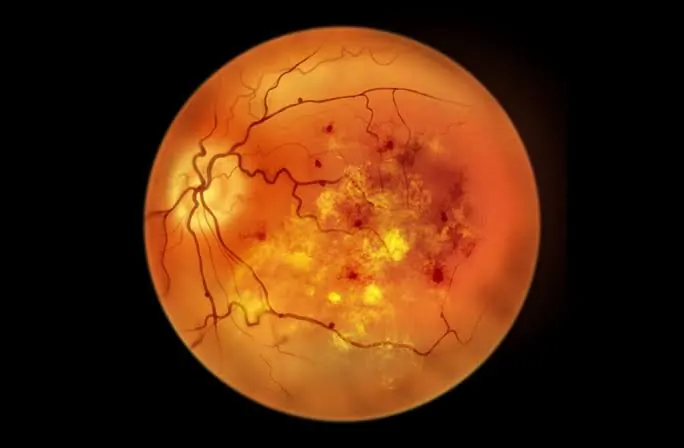
Diabetic retinopathy develops when persistently high blood sugar damages the small blood vessels of the retina, the light-sensitive layer at the back of the eye. Left unmonitored, it can progress and threaten vision.
It is often described in stages — from mild non-proliferative changes (small vessel damage) through to more advanced proliferative disease (abnormal new vessel growth) and diabetic macular edema (fluid swelling at the macula, the central part of the retina).
Diabetic retinopathy frequently has no symptoms in its earlier stages, which is why routine eye screening for people with diabetes is recommended even when vision feels normal.
Symptoms & Indications
Because early diabetic retinopathy is often symptom-free, do not wait for symptoms before starting annual screening if you have diabetes.
Vision may blur gradually, or fluctuate with blood sugar changes; either should prompt an eye check.
New floaters, cobweb-like shapes, or dark spots in vision can indicate bleeding inside the eye and need urgent review.
Reduced ability to see in low light can be an early sign in some patients with diabetic eye changes.
This can indicate a retinal bleed or detachment and needs same-day emergency ophthalmic review — do not wait.
Treatment Options
Regular dilated fundus examination, often supplemented with retinal photography or OCT, to detect early retinal changes.
Cross-sectional retinal imaging used to detect and monitor macular edema and guide treatment decisions.
For more advanced disease, laser photocoagulation or intravitreal injections may be recommended based on the specific findings — discussed individually with each patient.
What To Expect
A diabetic retinopathy screening visit is largely a diagnostic assessment; further steps depend entirely on what is found.
Eye drops are used to dilate the pupil so the retina can be examined fully.
The retina is examined in detail for early signs of vessel damage, bleeding or swelling.
OCT or retinal photography may be used to document and monitor specific areas of concern.
A monitoring interval or treatment plan is set based on the stage found, in coordination with your diabetes management.
Please note: Diabetic retinopathy management works alongside — not instead of — good blood sugar, blood pressure and lipid control with your physician. This page is educational and does not replace an in-person eye examination.
Common Questions
Evaluated and treated under Dr. Deepak Gandhi, Director of Gandhi Eye Centre, with clinical experience across cataract, glaucoma, cornea, retina and pediatric eye care.
View Doctor Profile →If you have diabetes, book a dilated retinal examination at Gandhi Eye Centre, Faridabad.