An Implantable Collamer Lens (ICL) is a lens placed inside the eye, in front of or behind the iris, without removing the eye's natural lens — an alternative refractive option for some patients not suited to LASIK.
What Is It?
ICL (Implantable Collamer Lens) surgery involves placing a soft, biocompatible lens inside the eye to correct refractive error, while leaving the eye's own natural lens in place. This differs from LASIK, which reshapes the cornea, and from cataract surgery, which removes the natural lens.
ICLs are generally considered for patients with higher degrees of short-sightedness (myopia), or corneas that are thinner than what LASIK typically requires, after a full assessment.
As with any refractive procedure, ICL surgery is elective and requires a detailed pre-operative assessment to confirm suitability.
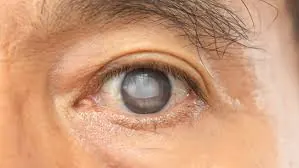
Symptoms & Indications
ICL is generally discussed with patients who want a refractive solution but are not ideal candidates for corneal-based procedures like LASIK.
Patients with significant short-sightedness beyond the range comfortably treated by LASIK may be considered for ICL.
Patients whose corneal thickness is insufficient for safe LASIK may still be candidates for ICL, since it does not involve corneal tissue removal.
A refractive error that has remained stable for a period of time, confirmed on repeat testing, is generally required before ICL is considered.
Some patients prefer an option that does not permanently reshape the cornea; this is discussed as part of counselling on alternatives.
Treatment Options
Corneal thickness, anterior chamber depth, endothelial cell count and refractive stability are assessed to confirm ICL suitability.
The lens is inserted through a small incision and positioned inside the eye without removing the natural lens.
LASIK, glasses and contact lenses are discussed as alternatives where relevant, so the choice is made with full information.
What To Expect
ICL surgery involves a thorough work-up before the day of the procedure, since eligibility depends on several eye measurements.
Anterior chamber depth, corneal endothelial cell count, corneal thickness and refraction are measured over one or more visits.
Findings are reviewed to confirm whether ICL, LASIK or another option is most appropriate for your eyes.
The ICL is implanted through a small incision under local anaesthesia, typically as a day-care procedure.
Eye pressure, lens position and vision are monitored at scheduled follow-up visits after surgery.
Please note: ICL is not suitable for every patient — certain anterior chamber depths, corneal endothelial cell counts, or unstable refractive error may rule it out. Final eligibility is confirmed only after in-person testing.
Common Questions
Evaluated and treated under Dr. Deepak Gandhi, Director of Gandhi Eye Centre, with clinical experience across cataract, glaucoma, cornea, retina and pediatric eye care.
View Doctor Profile →Book a refractive surgery evaluation at Gandhi Eye Centre, Faridabad, to discuss ICL and other options.