When the eye's natural lens is removed during cataract surgery, it is replaced with an artificial intraocular lens (IOL). Several lens categories are available, each suited to different visual needs.
What Is It?
During cataract surgery, the eye's clouded natural lens is removed and replaced with an intraocular lens (IOL). The choice of IOL affects how much a person may still depend on glasses after surgery.
IOLs are broadly grouped as monofocal (a single, fixed focusing distance — usually distance vision, with glasses typically needed for near work), toric (correcting pre-existing corneal astigmatism), and extended-depth-of-focus/multifocal designs (aimed at reducing dependence on glasses across more than one distance, where suitable).
Not every lens type is appropriate for every eye. Corneal shape, retina health, pupil size and a patient's visual priorities are all assessed before a lens is recommended.
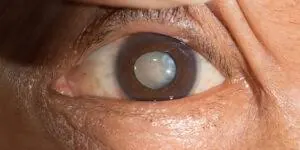
Symptoms & Indications
A premium IOL discussion is usually relevant once cataract surgery is already indicated — for example, when vision has become cloudy, glare-sensitive or dim due to a cataract.
A cataract must first be diagnosed as the cause of blurred or reduced vision before any IOL choice is discussed.
Patients who would like to reduce, though not necessarily eliminate, dependence on glasses after cataract surgery may ask about premium lens options.
Patients with meaningful corneal astigmatism may be considered for a toric IOL to address it at the time of surgery.
Premium lenses require healthy retina, cornea and optic nerve status; conditions such as significant macular disease may make a standard monofocal IOL the more appropriate choice.
Treatment Options
A standard, single-focus lens correcting vision at one distance — most commonly distance vision, with reading glasses typically still needed.
Designed to correct pre-existing corneal astigmatism at the same time as cataract surgery, for patients with a measurable, regular astigmatism.
Aims to provide a functional range of vision at more than one distance for suitable candidates, discussed individually based on eye measurements and lifestyle.
What To Expect
Selecting an IOL is a structured process carried out before surgery, not a decision made on the day itself.
Eye measurements (axial length, corneal curvature) are taken to calculate the lens power required for each eye.
Dr. Gandhi discusses distance vs near vision priorities, hobbies, driving and reading habits to guide the lens conversation.
Corneal, retinal and pupil findings are reviewed to confirm which lens categories are appropriate for that eye.
The chosen IOL is implanted during cataract surgery, with follow-up visits to check vision and healing.
Please note: Not every eye is suitable for every lens type, and premium lenses involve trade-offs (such as night-time glare in some multifocal designs) that are discussed individually. Costs and lens availability should be confirmed directly with the centre and are not published here.
Common Questions
Evaluated and treated under Dr. Deepak Gandhi, Director of Gandhi Eye Centre, with clinical experience across cataract, glaucoma, cornea, retina and pediatric eye care.
View Doctor Profile →Book a cataract evaluation at Gandhi Eye Centre, Faridabad, to discuss which IOL option may suit you.